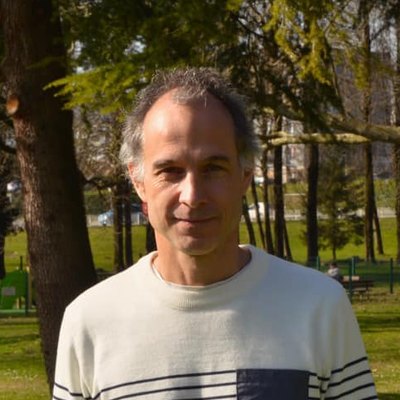
Julien spent twenty years as a geologist-software engineer at
Paradigm Geo, where
he worked on geostatistical modelling and uncertainty analysis tools. A geological
engineer trained at the
Nancy school of
geology, he studied geostatistics for eighteen months at the
Stanford Center for
Earth Resources Forecasting and then worked a year at Landmark Graphics in Austin.
From 2007 onwards, the climate threat pushed him elsewhere: a finance degree at IAE
Grenoble, a PhD on the biocapacity and ecological footprint of the Grenoble area
(started under Denis Dupré, abandoned in 2015), then an MSc in applied mathematics and
statistics at Université Grenoble Alpes in 2016.
He has worked with Inria’s STEEP team for fifteen years and co-developed the supply
chain material flow analysis method alongside Jean-Yves Courtonne (two joint papers).
Head of software for the ADEME-funded AF Filières project from 2017 to 2019, he founded
TerriFlux in 2021 to carry the method, the code and the studies over the long run.
Alexandre Pannier
Material and energy flow analyst
Alexandre graduated as an engineer from Sup’EnR (2022), the renewable
energy school in Perpignan: solar, wind, hydro, biomass, geothermal, and the
thermodynamics that comes with them. His student work already covered heat recovery
from a waste incinerator and the modelling of hybrid solar panels.
He joined TerriFlux in 2022, after an internship on the ADEME
Scalable project computing environmental footprints (nitrogen and
energy) for the soft wheat supply chain. Since then he has run the firm’s flow
studies, both commercial and research ones.
His training brings in the energy side: making a material balance and an
energy balance hold together, with the same demands on traceability and uncertainty.
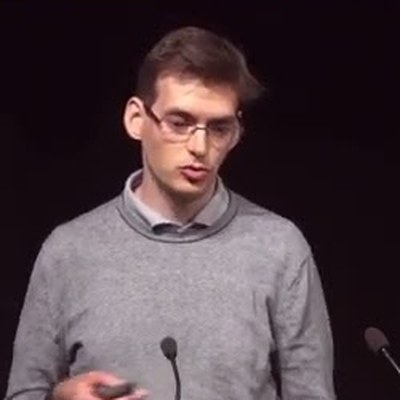
Jean-Yves Courtonne
Research partner · Inria STEEP
Jean-Yves is a researcher in Inria Grenoble’s
STEEP team. A
doctor in management science from Université Grenoble Alpes, his
thesis
(2016) addresses the environmental pressures generated by a local authority, with the
aim of giving territorial stakeholders something concrete to discuss. It was carried out
in partnership with Artelia Eau & Environnement.
That thesis is the founding text of everything we do: describing a supply chain as
products and sectors, reconciling heterogeneous data, quantifying uncertainties, scaling
from national to regional. From September 2017 to October 2019 he coordinated the ADEME
AF Filières project that took the method to full scale.
He is not a TerriFlux employee: he is our research partner, co-author of the founding
papers and consortium teammate on current projects.